
DharmaSpiritual careTarka
Understanding and Defining Hindu and Integrative Spiritual Care
Uses the Tarka Method to define spiritual care for contemporary organisations and practice.
Explore all 21 academic A0 posters, with selected references and original research figures where available. Download a web edition or the print edition with bleed and crop marks.
Uses the Tarka Method to define spiritual care for contemporary organisations and practice.
Connects dharmic purpose and integrative spirituality with human flourishing amid technological change.
Applies ṛta, karma, non-attachment and interconnectedness to the ethics of AI and innovation.
Verbindt dharma en holistische welvaart met de vraag wanneer technologie het goede leven dient.
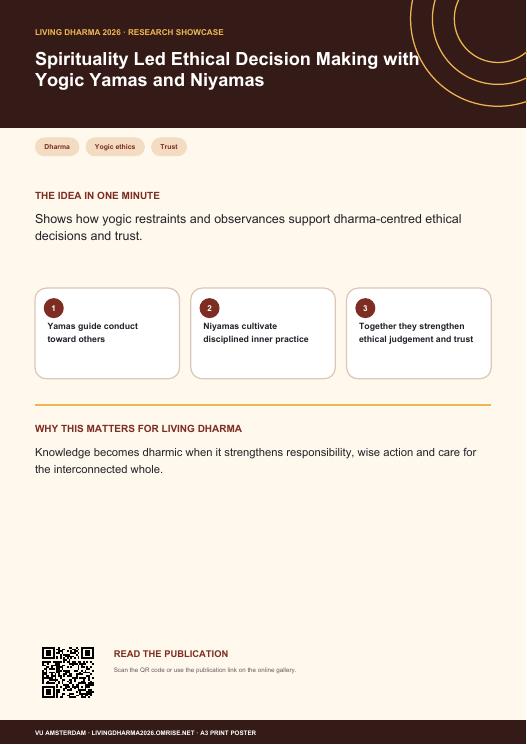
Shows how yogic restraints and observances support dharma-centred ethical decisions and trust.
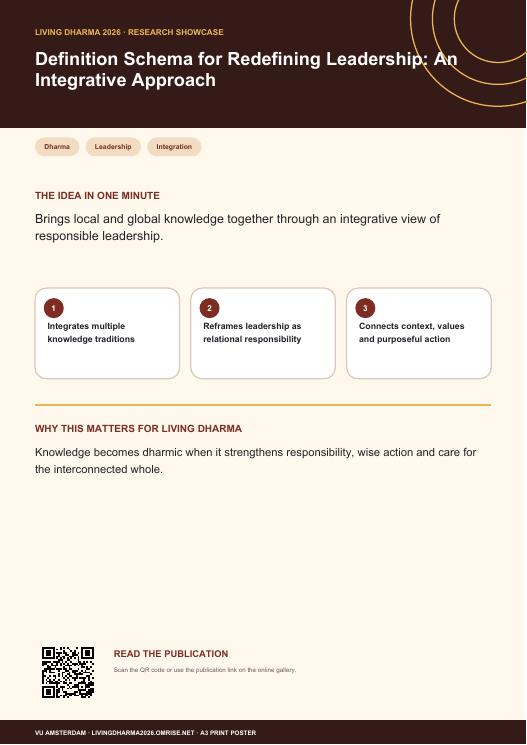
Brings local and global knowledge together through an integrative view of responsible leadership.
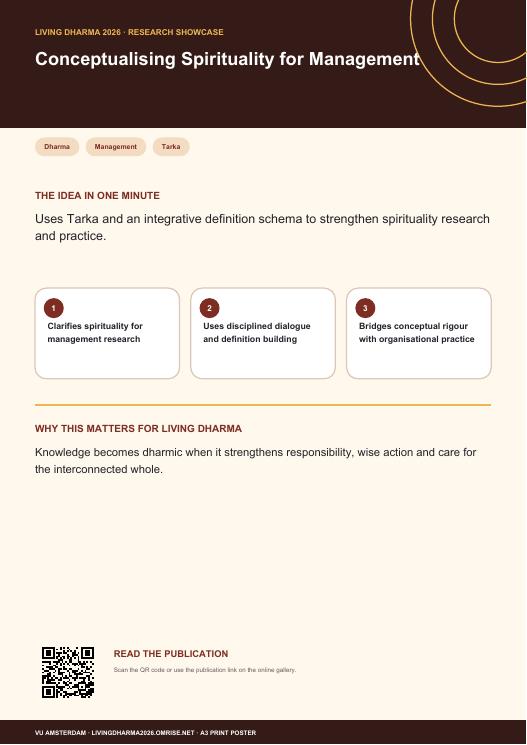
Uses Tarka and an integrative definition schema to strengthen spirituality research and practice.
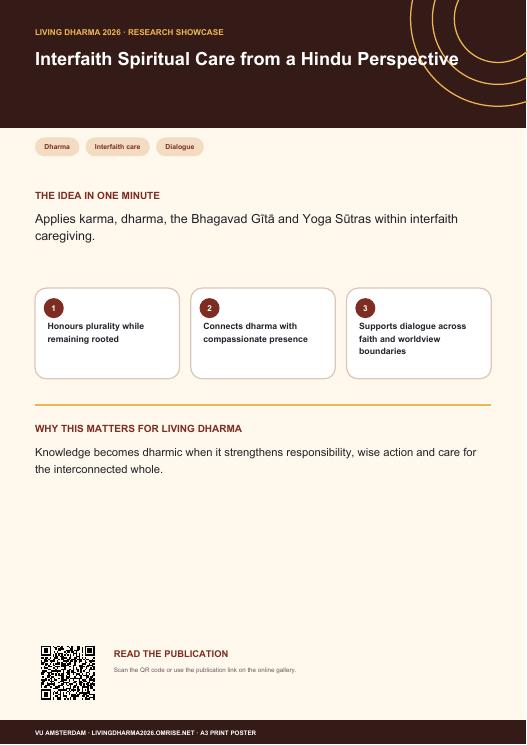
Applies karma, dharma, the Bhagavad Gītā and Yoga Sūtras within interfaith caregiving.
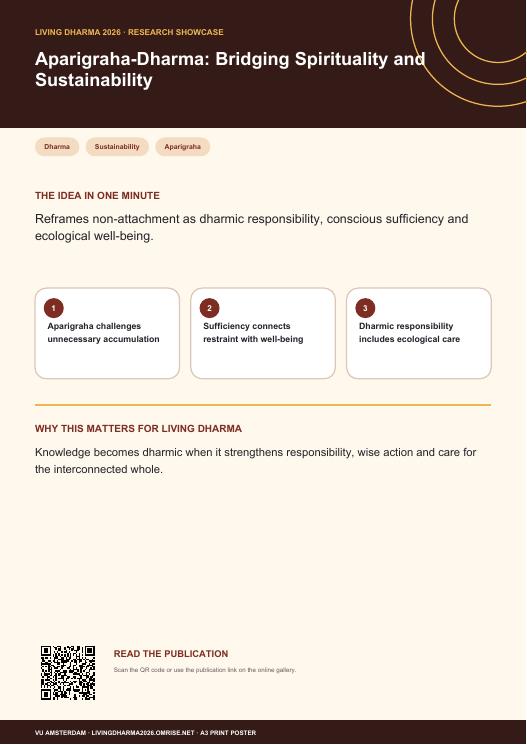
Reframes non-attachment as dharmic responsibility, conscious sufficiency and ecological well-being.
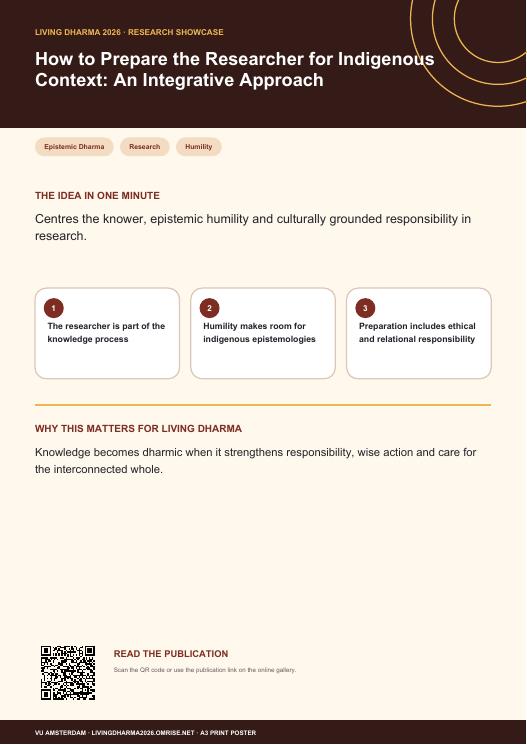
Centres the knower, epistemic humility and culturally grounded responsibility in research.
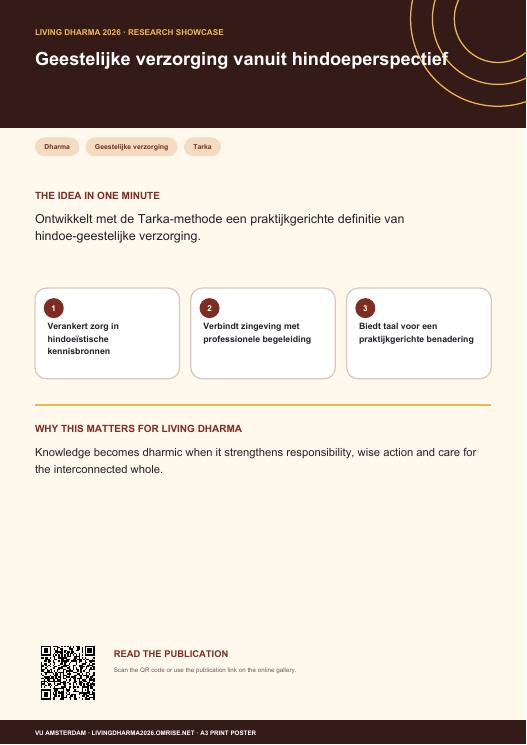
Ontwikkelt met de Tarka-methode een praktijkgerichte definitie van hindoe-geestelijke verzorging.
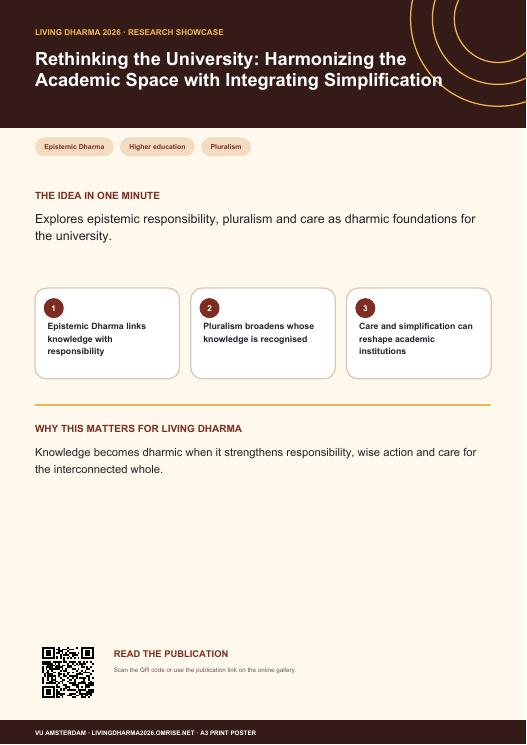
Explores epistemic responsibility, pluralism and care as dharmic foundations for the university.
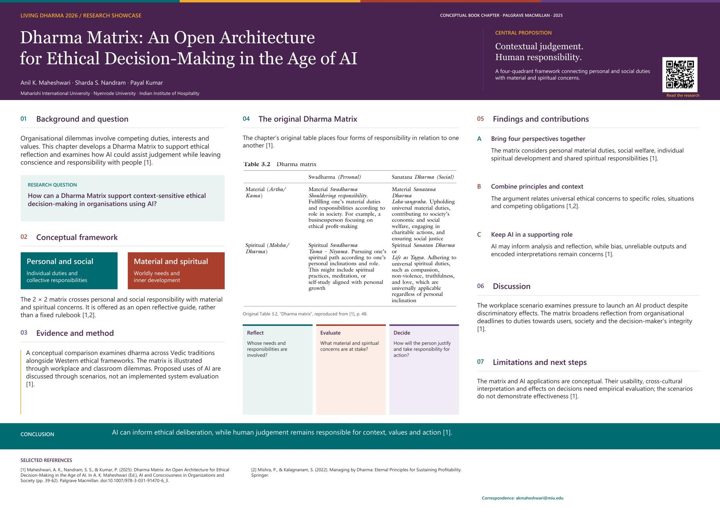
An open matrix connects personal and social duties with material and spiritual responsibilities.
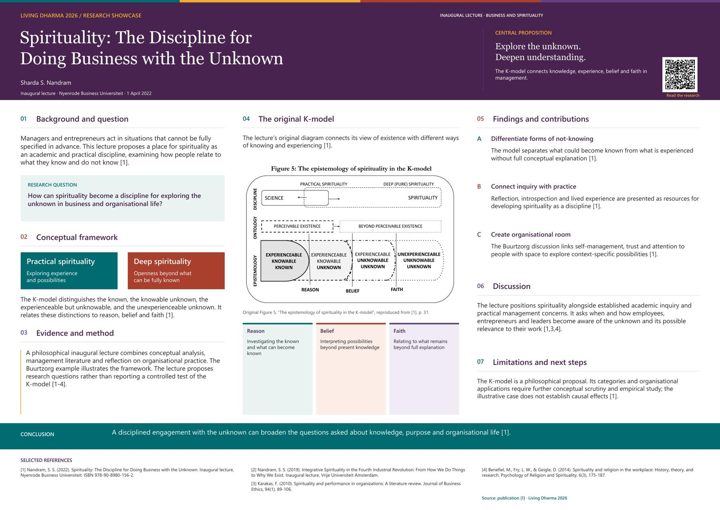
The inaugural lecture explores the unknown through its original K-model of spirituality and management.
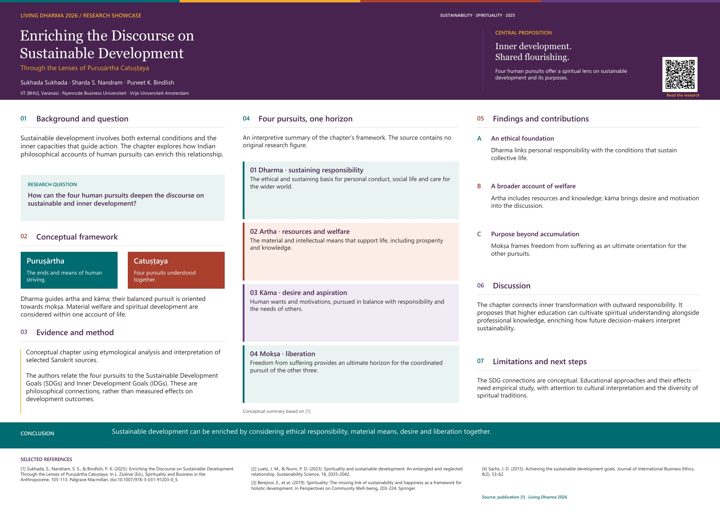
Four human pursuits offer a spiritual lens on sustainable development and its purposes.
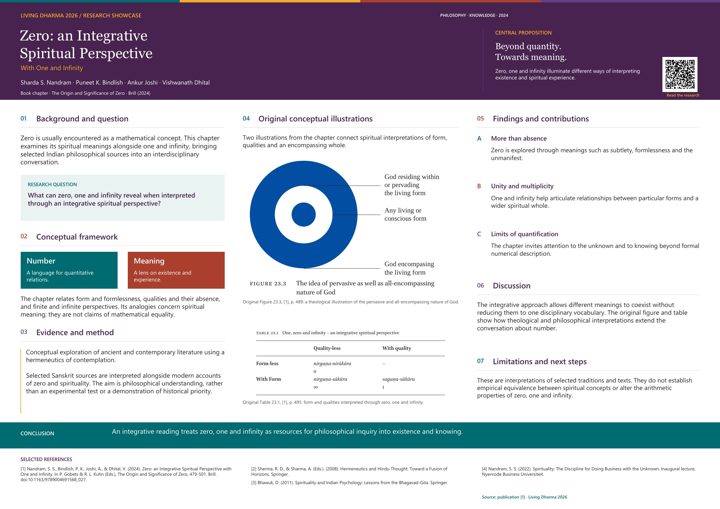
Zero, one and infinity illuminate different ways of interpreting existence and spiritual experience.
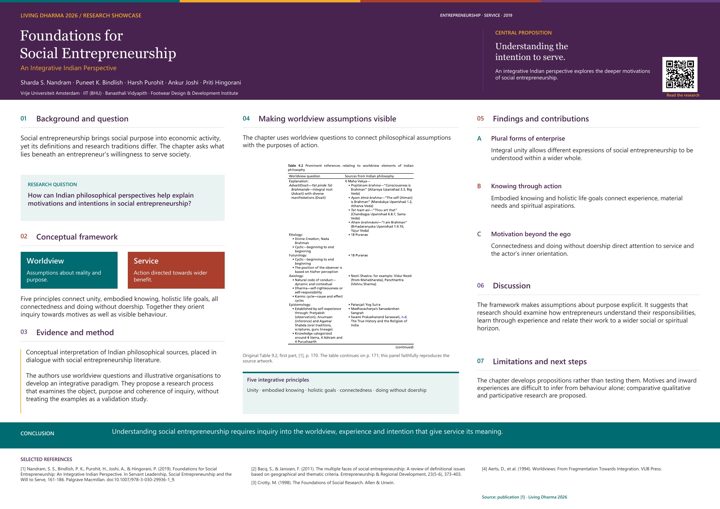
An integrative Indian perspective explores the deeper motivations of social entrepreneurship.
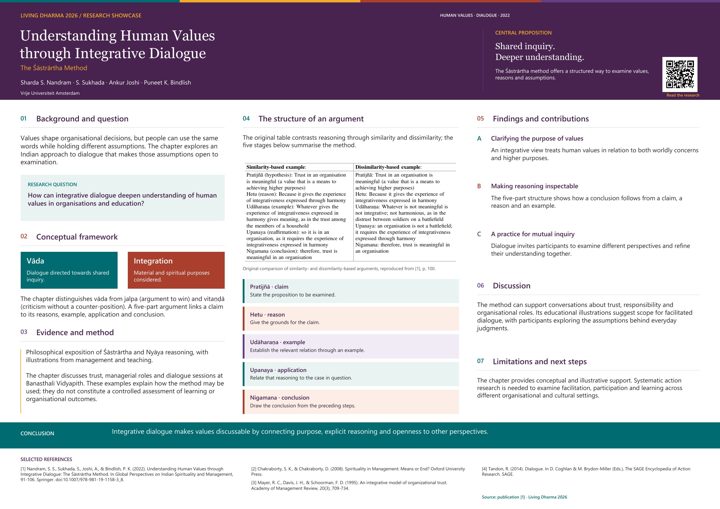
The Śāstrārtha method offers a structured way to examine values, reasons and assumptions.
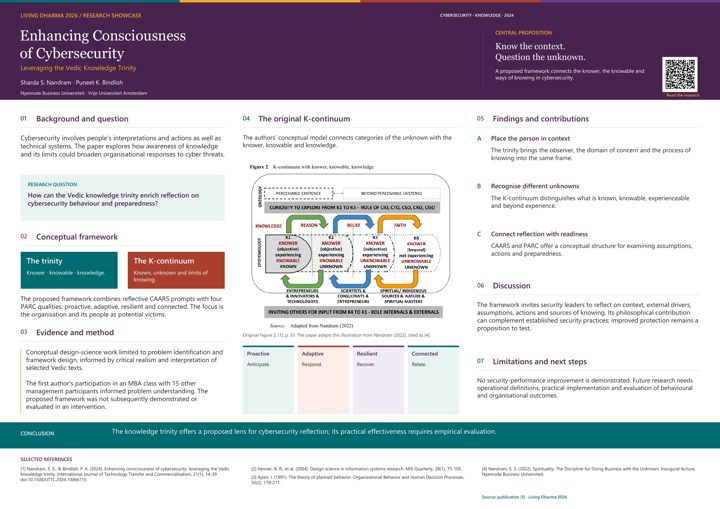
A proposed framework connects the knower, the knowable and ways of knowing in cybersecurity.
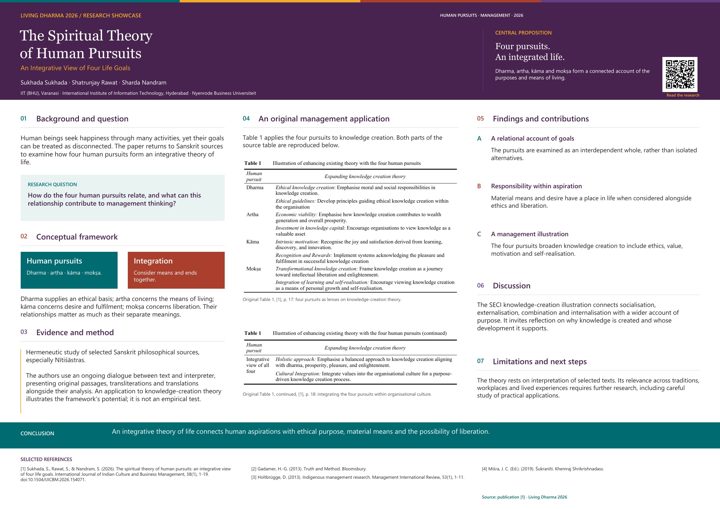
Dharma, artha, kāma and mokṣa form a connected account of the purposes and means of living.
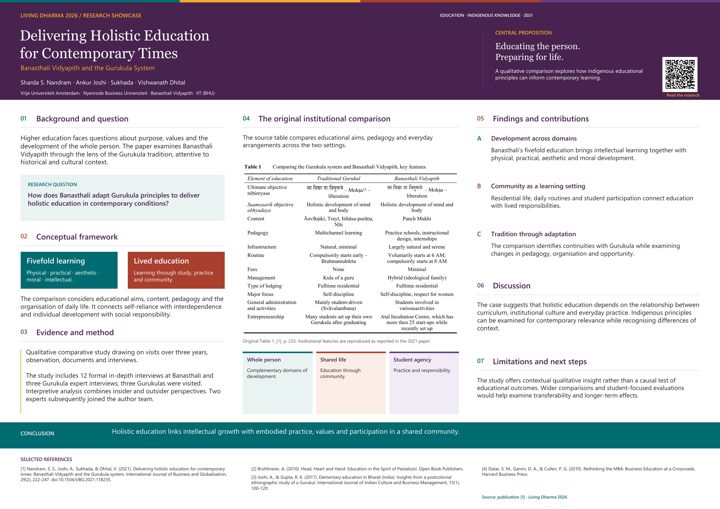
A qualitative comparison explores how indigenous educational principles can inform contemporary learning.