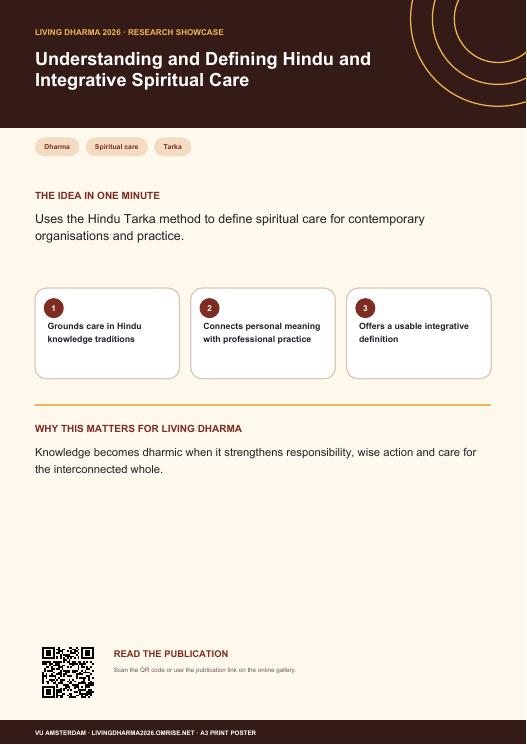
01 / RESEARCH SHOWCASE
Understanding and Defining Hindu and Integrative Spiritual Care
An integrative definition grounded in Hindu philosophy and practitioner knowledge.
Explore all 21 exhibition posters, with academic summaries, selected references and original research figures where available. Choose a web PDF for reading or a print PDF for the exhibition.
Finished size: 1189 × 841 mm. Print editions include 3 mm bleed and crop marks. Printer and original-figure notes ↗
An integrative definition grounded in Hindu philosophy and practitioner knowledge.
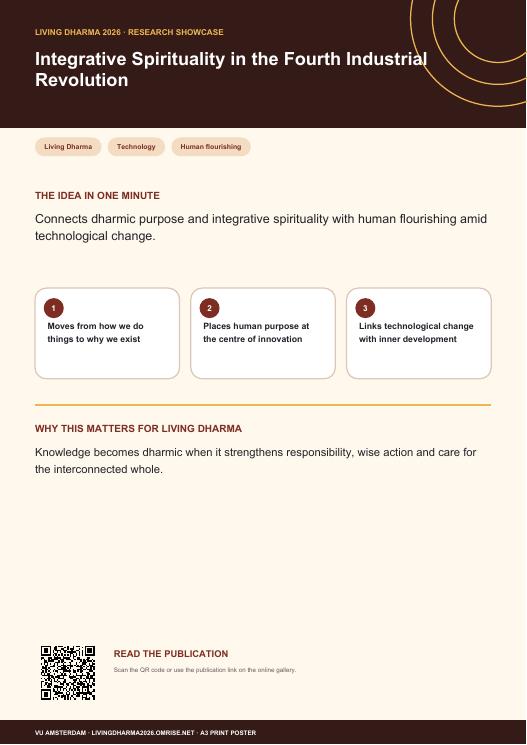
An integrative approach to human meaning, knowledge and organisational design.
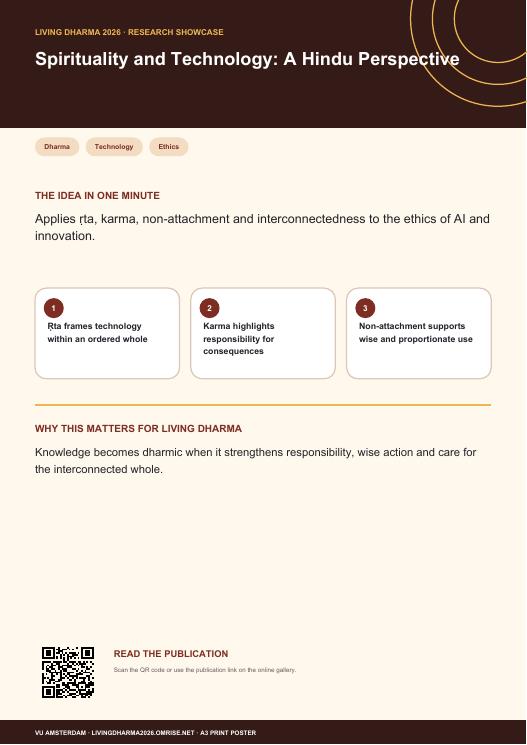
Five guiding ideas for examining technology through Hindu philosophical perspectives.
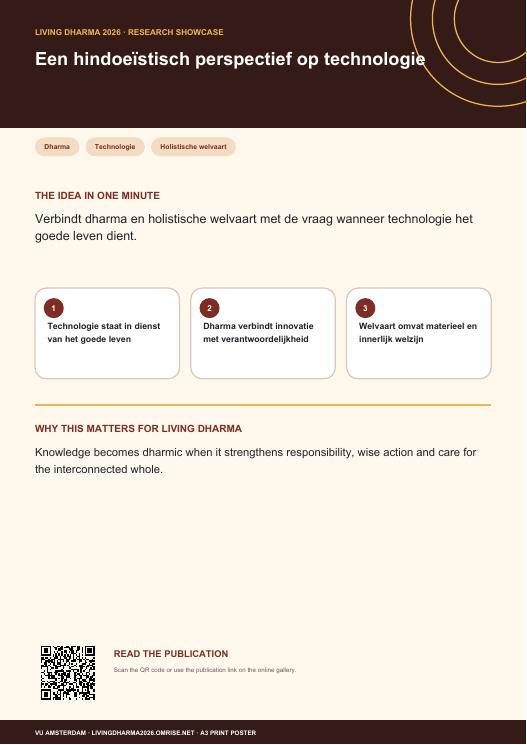
A Hindu perspective on technology, humanoid robots and spiritual care.
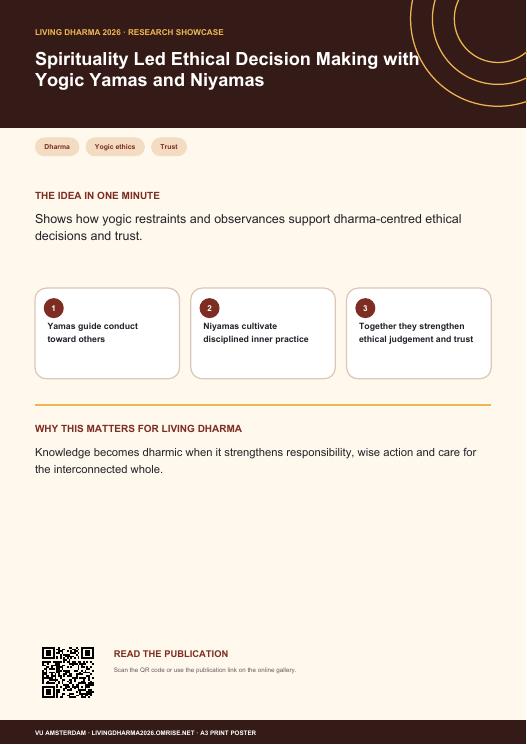
Yogic restraints and observances connect ethical reflection, everyday action and trust.
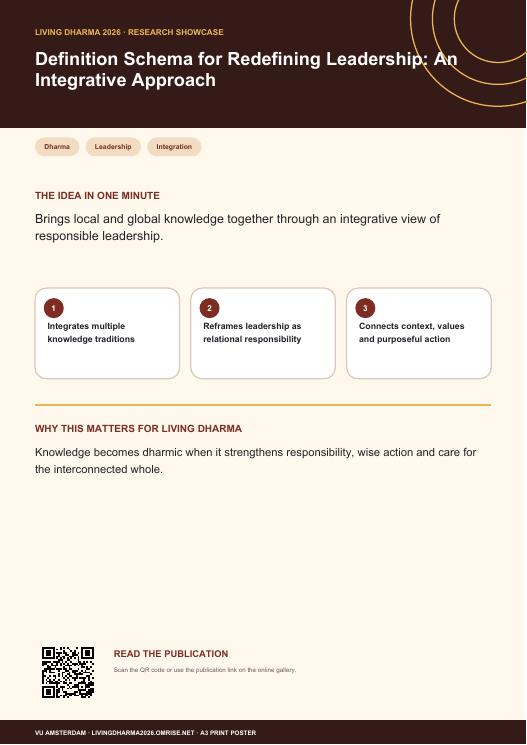
A framework for defining leadership across contexts, perspectives and purposes.
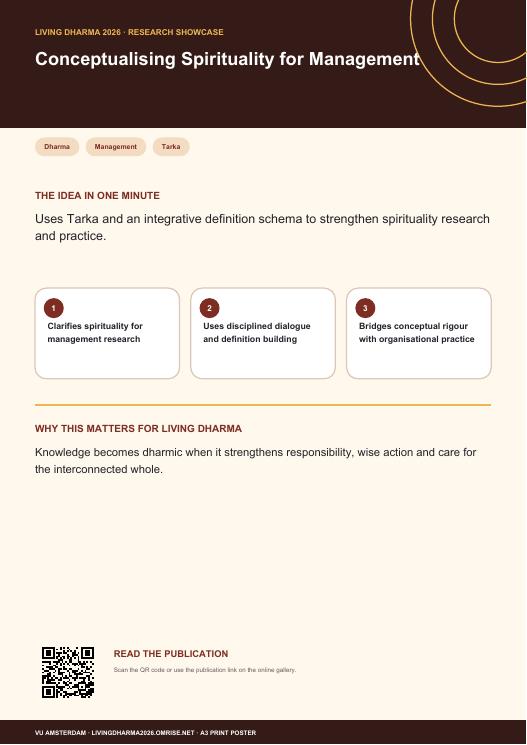
Conceptual clarity for spirituality across individual and organisational settings.
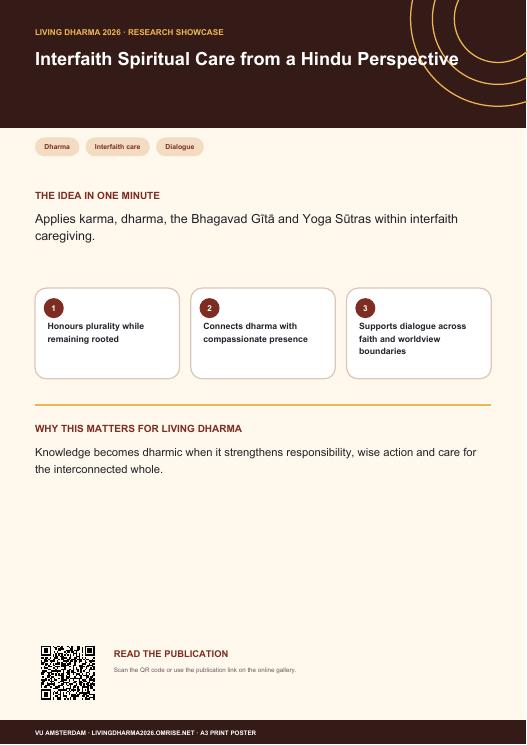
The H-framework links Hindu philosophical resources with client-centred spiritual care.
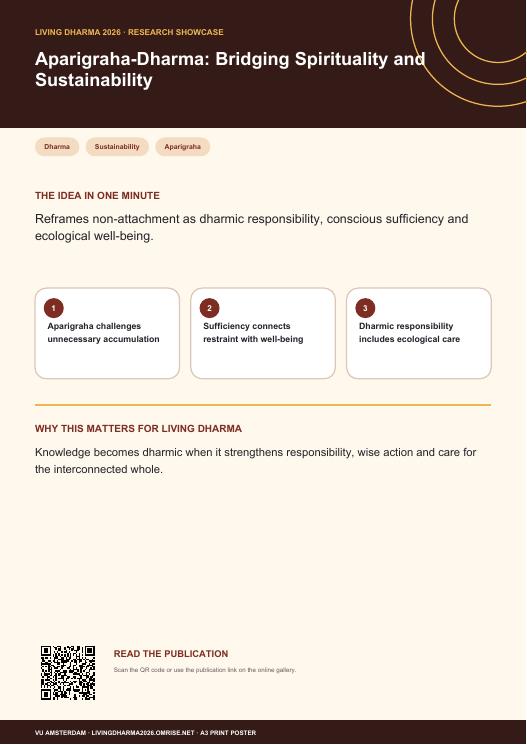
An indigenous ethical perspective on possessions, purpose and ecological life.
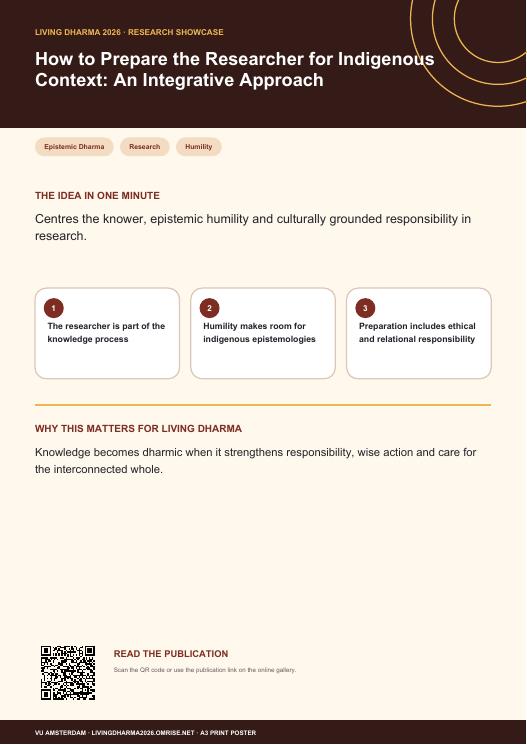
Researcher preparation as part of understanding an indigenous context.
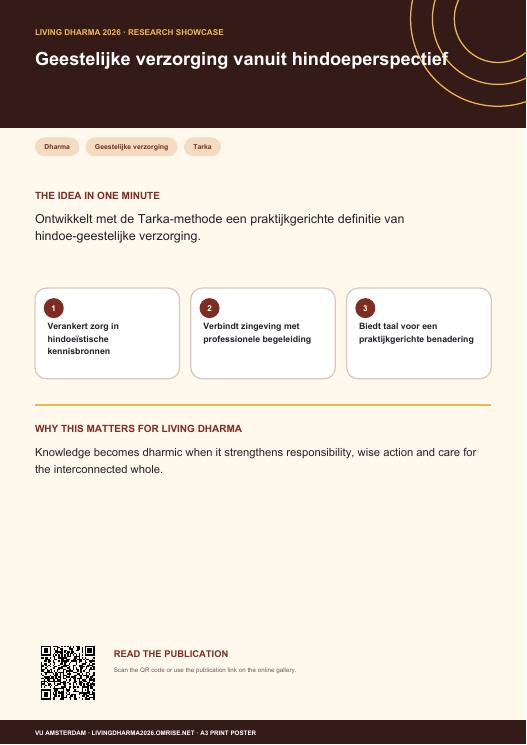
Defining Hindu spiritual care through Tarka and professional experience.
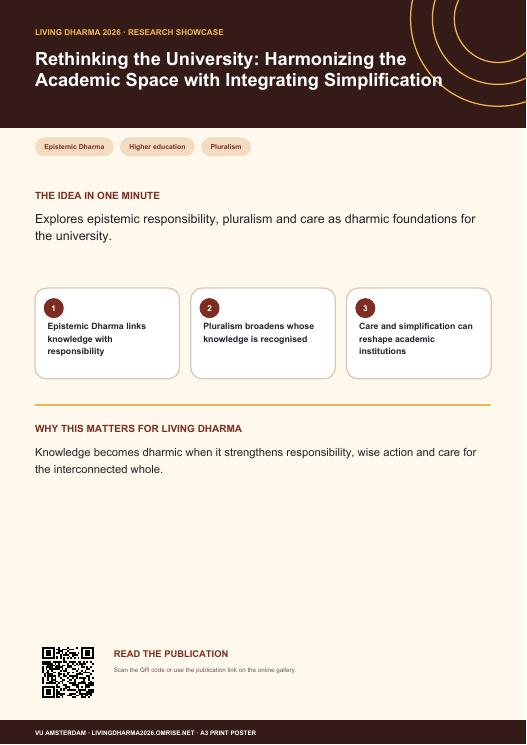
Integrating Simplification as a design philosophy for the university.
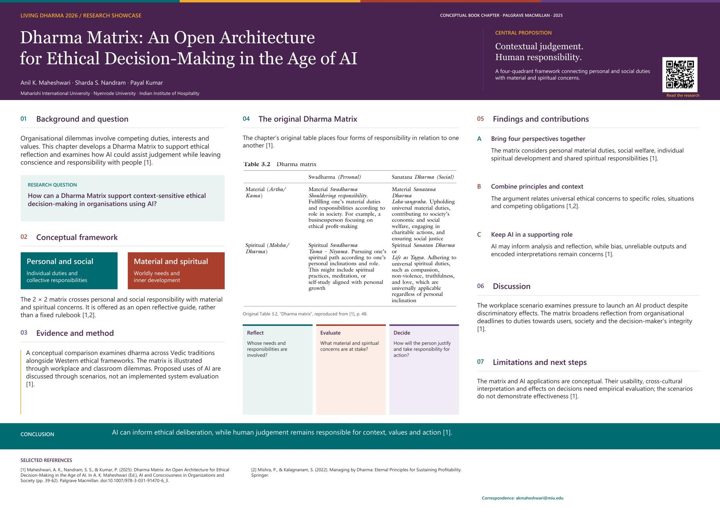
A four-quadrant framework connecting personal and social duties with material and spiritual concerns.
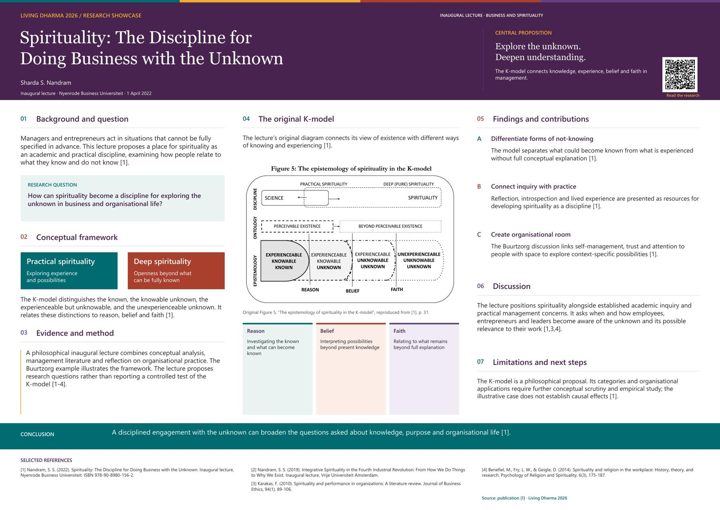
The K-model connects knowledge, experience, belief and faith in management.
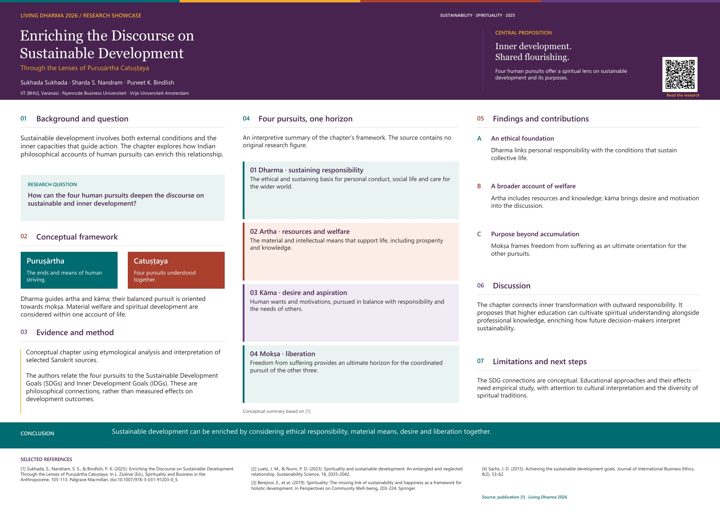
Four human pursuits offer a spiritual lens on sustainable development and its purposes.
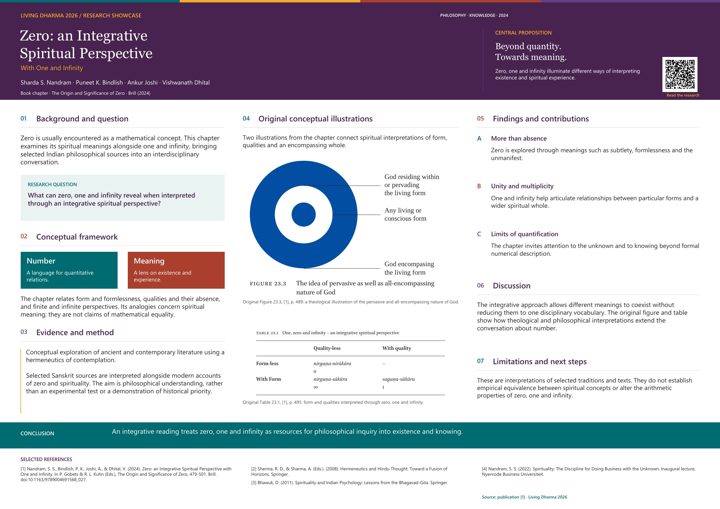
Zero, one and infinity illuminate different ways of interpreting existence and spiritual experience.
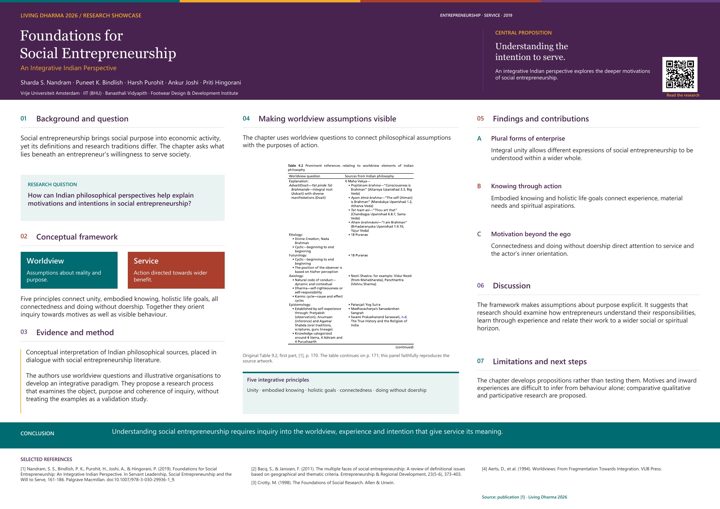
An integrative Indian perspective explores the deeper motivations of social entrepreneurship.
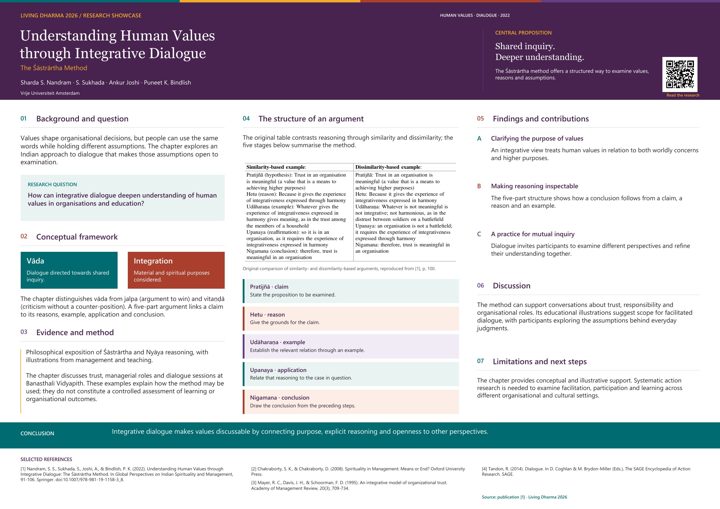
The Śāstrārtha method offers a structured way to examine values, reasons and assumptions.
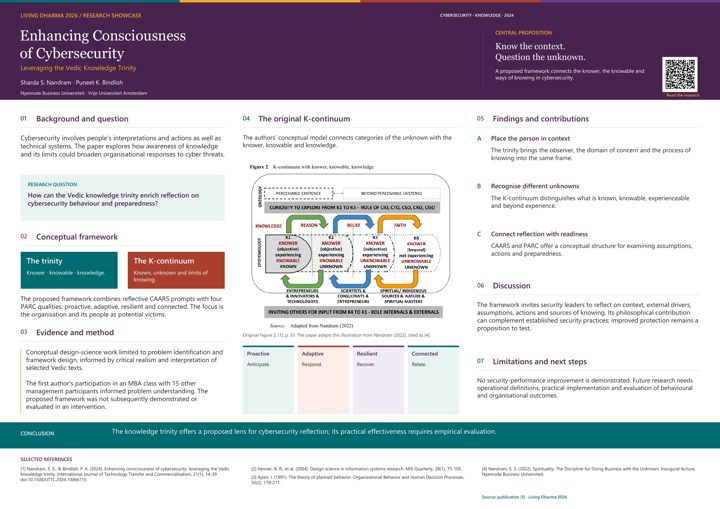
A proposed framework connects the knower, the knowable and ways of knowing in cybersecurity.
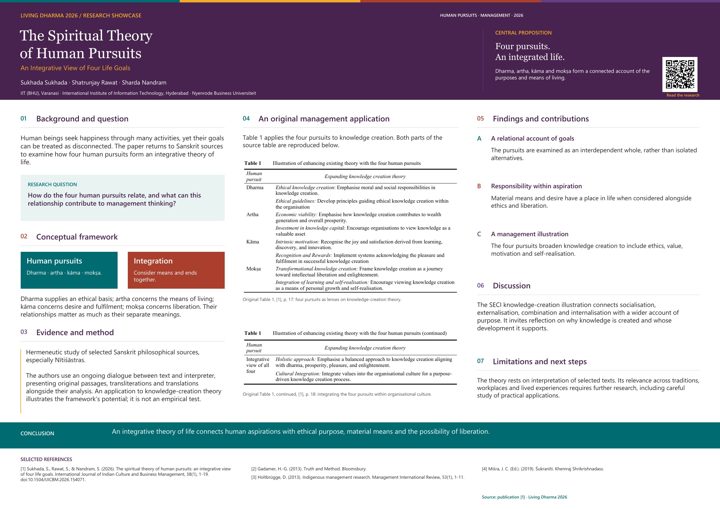
Dharma, artha, kāma and mokṣa form a connected account of the purposes and means of living.
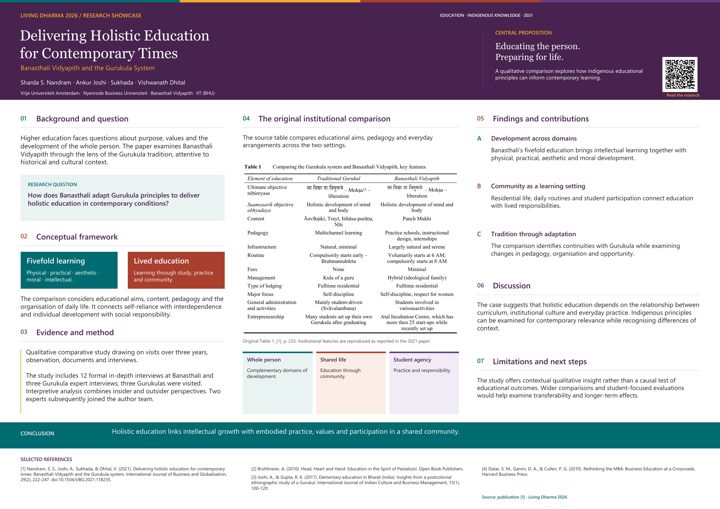
A qualitative comparison explores how indigenous educational principles can inform contemporary learning.